Ever sat down to study, textbook open, only to find your mind wandering to what you're going to have for dinner, that awkward conversation you had last week, or pretty much anything but the material in front of you? You're not alone. Learning how to concentrate better while studying is a challenge for almost everyone at some point. The good news is, focus is a skill you can sharpen.
At a Glance: Key Takeaways for Better Study Concentration
- Optimize Your Environment: Minimize distractions in your study space.
- Plan and Prioritize: Create a study schedule and break down tasks.
- Use Effective Study Techniques: Actively engage with the material.
- Practice Mental Discipline: Gently redirect your wandering mind.
- Build Healthy Habits: Prioritize sleep, nutrition, and movement.
- Seek External Support: Consider study groups or focus apps.
Your Study Space: A Sanctuary for Focus
Let’s face it, your environment plays a huge role in your ability to concentrate. Think of your study space as your mental dojo. You wouldn't train in a cluttered, noisy gym, would you? The same principle applies here.
Declutter Your Physical Space
Start by minimizing distractions. A clean, organized workspace signals to your brain that it's time to focus. Remove anything unnecessary from your desk – that stack of mail, the impulse purchases you've been meaning to return, even that cute but distracting desk toy. Find a designated space, be it a corner of your room, the library, or a quiet coffee shop. The key is consistency; training your brain to associate the spot with study. You might be surprised Boost Your Study Focus how much this helps.
Experiment with Your Ideal Study Spot
Not everyone thrives in complete silence. Some people find white noise or ambient music helpful. Others prefer the low hum of a coffee shop. Experiment to find what works best for you. Do you concentrate better in a brightly lit room or a cozy, dimly lit space? Alone, or with the quiet presence of others? Don't be afraid to explore different environments until you discover your focus sweet spot.
Digital Detox: Taming the Tech Beast
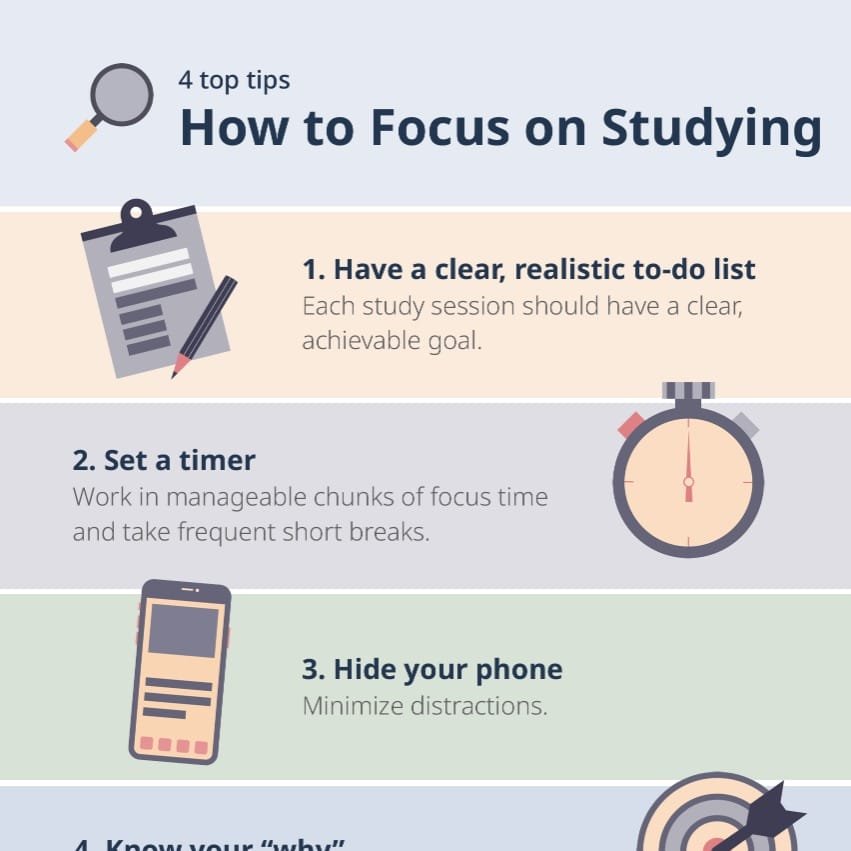
This is a big one. Smartphones are concentration kryptonite. Turn off notifications, put your phone in another room, or use an app to block distracting websites. Consider website blockers like Freedom, or focus apps such as Forest, which gamifies staying on task. Another great tip? Consider wearing noise-canceling headphones, even without music, to create a physical barrier against distractions.
Master the Art of Planning and Prioritization
Imagine trying to build a house without blueprints. Overwhelming, right? Studying without a plan is similar. Effective planning is vital a strategy for improving concentration to maintaining focus and avoiding overwhelm.
Create a Realistic Study Schedule
Consistency is key. Set aside specific times each day or week for studying. Treat these blocks of time as non-negotiable appointments. Consider your energy levels throughout the day. Are you a morning person or a night owl? Schedule your most challenging subjects for when you're most alert.
Break Down Large Tasks into Smaller, Manageable Goals
Staring at a massive textbook can feel daunting. Instead, break down your study sessions into smaller, more manageable goals. For example, instead of "study Chapter 5," aim to "read the first section of Chapter 5 and take notes." Smaller, achievable goals provide a sense of accomplishment and keep you motivated.
Prioritize Your Tasks: The Power of the To-Do List
Create a to-do list at the beginning of each study session. Prioritize the most important tasks and tackle those first. Focus on completing 2-3 essential tasks rather than trying to do everything at once. As Daniel Wong suggests, writing down the tasks you need to complete can also help you stay on track. Consider using a physical planner or a digital task management app to stay organized.
Unlock Your Focus Potential with Effective Study Techniques
Simply reading and re-reading material is a passive way to study. Engaging actively with the material is crucial for improving concentration and retention. Here are some proven techniques:
Active Recall: Test Yourself Regularly
Instead of passively reviewing notes, actively test yourself on the material. Use flashcards, practice questions, or simply try to recall information from memory. This actively engages your brain and helps solidify your understanding.
Elaborative Interrogation: Ask "Why?"
Connect the material to your existing knowledge and experiences. Ask yourself "why" questions about the concepts you're learning. How does this relate to real-world situations? How does it connect to other things you already know? This deepens your understanding and makes the material more engaging.
The Feynman Technique: Teach It to Someone Else
Pretend you're teaching the material to someone else (even if it's just your rubber ducky). This forces you to simplify the concepts and identify any gaps in your understanding. If you can't explain something clearly, you don't truly understand it.
Vary Your Study Methods: Keep Things Interesting
Don't get stuck in a rut. Experiment with different study methods to keep your brain engaged. Try making notes, drawing diagrams, creating outlines, or using flashcards. Interleaving, or switching between different subjects, can also prevent boredom and improve retention.
The Pomodoro Technique: Timeboxing for Focus
This is a powerful technique for boosting concentration. Work in focused 25-minute intervals, followed by a short 5-minute break. After every four intervals, take a longer break of 15-30 minutes. This method helps maintain focus and prevent burnout. Set a timer and stick to it.
Mental Strategies for Staying Present
Even with the perfect environment and study techniques, your mind will inevitably wander. The key is to develop mental strategies for gently redirecting your attention back to the task at hand.
"Be Here Now": The Art of Present Moment Awareness
When you notice your mind wandering, gently bring your attention back to the present moment. Focus on your breath, the sensations in your body, or the words on the page. Don't judge yourself for getting distracted; simply acknowledge the thought and redirect your focus. It's like training a muscle; the more you practice, the stronger your focus becomes.
Acknowledge and Note Mental Distractions
Keep a notepad nearby and jot down any recurring thoughts or worries that are distracting you. Getting them out of your head and onto paper can free up mental space for focusing on your studies.
Schedule Worry Time
If you find yourself constantly worrying about something, schedule a specific time each day to address those concerns. This allows you to compartmentalize your worries and prevent them from interfering with your study time.
Mindfulness and Meditation: Train Your Brain to Focus
Practicing mindfulness and meditation can significantly improve your ability to concentrate. Even a few minutes of daily meditation can help you become more aware of your thoughts and emotions, making it easier to stay focused. There are many free apps and online resources to guide you through mindfulness exercises. As Daniel Wong suggests, even deep breathing exercises can help you regain focus when you feel your mind wandering.
Fuel Your Focus: The Power of Healthy Habits
Your physical health directly impacts your mental performance. Think of your body as the engine of your mind. A well-fueled and maintained engine runs more smoothly and efficiently.
Prioritize Sleep: The Foundation of Focus
Sleep deprivation impairs cognitive function, making it difficult to concentrate. Aim for at least 7-8 hours of quality sleep each night. Establish a regular sleep schedule and create a relaxing bedtime routine to improve your sleep quality.
Nourish Your Brain with Healthy Foods
What you eat affects your brainpower. Focus on consuming a balanced diet rich in fruits, vegetables, whole grains, and lean protein. Avoid processed foods, sugary drinks, and excessive caffeine, which can lead to energy crashes and decreased focus. Stay hydrated by drinking plenty of water throughout the day.
Move Your Body: Exercise for Enhanced Concentration
Physical activity increases blood flow to the brain, which improves cognitive function and concentration. Take short breaks during your study sessions to stretch, walk around, or do some light exercise. As the research shows, even short bursts of activity can make a big difference.
Optimize Your Environment: Temperature Matters
Believe it or not, the temperature of your study environment can affect your ability to concentrate. According to studies, the optimal room temperature for cognitive performance is between 72°F and 77°F (22°C to 25°C).
External Support: Leveraging Resources for Success
Don't be afraid to seek external support when needed. Sometimes, a little help from others or technology can make a big difference.
Find a Study Buddy: Collaborate and Stay Accountable
Studying with a friend can make the process more enjoyable and help you stay motivated. Discuss the material, quiz each other, and provide support when needed. Consider using Focusmate for virtual co-working sessions.
Leverage Technology: Apps and Tools for Focus
There are many apps and tools available to help you improve your concentration. As mentioned earlier, apps like Freedom and Forest can block distractions, while apps like Brain.fm and Coffitivity can provide ambient noise to help you focus. Be aware of what can i take to improve your focus while studying.
From Theory to Action: Putting It All Together
Improving your concentration is a journey, not a destination. It takes time, practice, and patience. Don't get discouraged if you don't see results immediately. Start by implementing a few of these strategies and gradually incorporate more as you become more comfortable.
Remember, the key to success is consistency. Make these focus-enhancing habits a part of your daily routine, and you'll be well on your way to mastering the art of concentration and achieving your academic goals. As Daniel Wong says, prepare yourself mentally with a timer to get good studying sessions.
And if you are wondering what can i take to stay focused on your studies, remember these tips!
By creating a supportive environment, planning effectively, using active learning techniques, practicing mental discipline, prioritizing healthy habits, and leveraging external resources, you can significantly improve your ability to concentrate and unlock your full academic potential. Remember to focus on the process, not just the results, and celebrate your progress along the way. It may also Boost Your Study Focus to start simple.